Friday, 5 September 2014

Making a big bang about online piracy…

I recently snapped up one of my favourite comedies, the CBS series The Big Bang Theory, Series 1-6 on DVD for less than $15 a DVD, (or less than $2 an episode). There are many things I love about The Big Bang Theory in particular its engagement and analysis of popular culture and fandom. Scientists Sheldon, Leonard, Raj and Howard love their comics, superhero collectables, science fiction and computer, board and role playing games. They are frequent visitors to Comic-Con. It is always good to end the day with a laugh.

Most people who watch The Big Bang Theory will know Sheldon’s arch enemy Wil Wheaton who plays a fictionalised version of himself. (Wil Weaton played Wesley Crusher in Star Trek: The Next Generation and has been in countless movies and television series). As well as an accomplished actor Wil Wheaton is also a writer, creator and blogger who has engaged in the piracy debate for several years. (The Barenaked Ladies from Canada who wrote the theme song for the show have also in the past taken a public stance on piracy).

I have really got to admire people like Kurt Sutter and Wil Wheaton in the entertainment industry who become involved in debates like piracy. Wil Wheaton’s position seems quite different from that of another of my favourite fellas Kurt Sutter the creator, writer and actor in the television series Sons of Anarchy.

After putting in the search term piracy in his blog page WilWheaton.net I found some posts about piracy going back to 2008. He has really opened my eyes to so much about piracy and has the power to educate people like me. His topics about piracy include DRM on products, American piracy legislation and who is to blame for piracy.  

In 2013 Wil Wheaton made a video after an appearance at Comic-Con in United States where he talked openly and honestly about content access. He argued there will always be some people who pirate and will never pay for anything, but most people are honest and will be happy to pay for content. The entertainment industry just needs to make it easier for those people who want to pay too gain access to content.

However, after the cancellation of his television show Wil stated that in some circumstances piracy was good promotion for television shows. I don’t agree with people in the entertainment industry such as actors who make their living from television, music or movies to encourage people to engage with pirated content for any reason. I have learned a lot from this actor about piracy. He is putting his thoughts out there, informing and engaging fans and hopefully making a difference.  

Perhaps one of the greatest things I learned about writing and writing is about going back to the original source of ideas rather than reading other's interpretations as they are used to support their own cause.

Below is a brief summary of some of his ideas about online piracy from his blog. No copyright infringement intended.   


                                                           WilWheaton.net
                                              (no copyright infringement intended)


2008
In October 2008 Wil Wheaton wrote on his blog, a post titled “Why I won’t infect anything you buy from me with DRM” where he discusses why he won’t use particular distributors to sell his book and why he won’t infect his book with DRM (I am not really sure what DRM is although my understanding of how he explained it something that is attached to products so they can’t be watched in different locations).

“I haven’t made them available there partially because Audible wants to take an enormous cut of the sales price, but mostly because Audible infects and cripples all of their files with DRM, even if the publisher and rights holders doesn’t want them.

Let’s talk about DRM for a moment. It’s not a secret that I hate it and I believe that treating your customers like they’re thieves is no way to run a business. “But what about piracy you ask, and where can I get a stylish ascot like yours?”

I am not that worried about piracy to be completely honest with you. I agree with Cory Doctorow that obscurity is a greater threat to an artist than piracy, but I also trust my customers more than the average publisher, because I believe I have a different relationship with them (you) than the average publisher has with say, me. This may be a little naïve, but hear me out…

Because I feel a more personal relationship with all of you who’ve supported me and watch my work on television, I don’t worry that much about piracy. I don’t believe that anyone who reads my blog and is interested in hearing me perform my work would deliberately steal from me any more than they’d walk into a friend’s house and take money out of their wallet. (Awkward note: this doesn’t mean we’re friends, but you get that right”)…

2012
In January 2012 Wil Wheaton wrote on his blog a post titled“Today the US Senate is considering the legislation that would destroy the free an open Internet” and his response to the proposed restrictions on the Internet.

“I am 100 % opposed to SOPA and PIPA even though I’m one of the artists they were allegedly writer to protect. I’ve probably lost a few hundred dollars in my life to what the MPAA and RIAA define as piracy, and that sucks, but that doesn’t come close to how much money I’ve lost from a certain studio’s creative accounting…

The RIAA and MPAA are, again on the wrong side of history. Attempting to tear apart one of the single greatest communication achievements in human history is a misguided attempt to cling to the out dated business model instead of adapting to the changing world is a fucking crime… He encouraged people contact their local senators and vote no to the legislation.

In May 2012 Wil Wheaton wrote on his blog a post titled “An example of the usefulness of bittorrent for entirely legal purposes” and the need to change a business model that is out of date and the bad deal bittorrents are allegedly getting…

“I frequently find my in an unpopular position in the entertainment industry: I believe in network neutrality, I don’t believe that piracy is the end of the world as we know it. I particularly don’t believe that a download or file shared automatically equals a loss of sale and I don’t believe in crippling the Internet to protect a business model that desperately needs changing.”

He then went on to describe how Internet Service Providers are blocking bittorrent because people are under the impression they are used solely for pirating content. He then provided a demonstration. …

“Some ISP are blocking all bittorrent traffic, because bittorrent can be used to share files in a piratical way. Hollywood lobbying groups are trying to pass laws which would force ISPs to block or degrade bittorrent traffic...Anyway, my point with this post is to illustrate that the bittorrent protocol is useful for more than just infringement, so when you hear industry lobby groups make a lot to noise about piracy, you’ll remember that they aren’t giving you all the facts”.

2013
In 2013 Wil Wheaton gave an interview in video about online piracy shortly after he appeared at a Comic Con event in America. He said the entertainment industry was to blame for the amount of online piracy in America.

“As soon as the entertainment industry provides an alternative to bit-torrent or an alternative to online piracy – that makes it ways for honest people to get access to program content then piracy dries up.

Gabe newel (CEO of Valve) says that pirates provide better customer service. How many times have you paid for a DRM  license for something and the server goes down, or travel across the border? I rented some episodes on Amazon for Dr Who: when I went to Canada – I paid for them in America: I live in America – they say “you can’t watch it anymore because you’re not in America anymore”. That made me angry because I was being honest. I was an honest person. If I had stolen it, I would be watching it”.

2014
In 2014 Wil Wheaton wrote on his blog about the first day about shooting The Wil Wheaton Project and encouraged people to watch it firstly through legal means and in a way that counts but if not through piracy.

“ I know a lot of you reading this don’t subscribe to cable or satellite, and as far as I know it will be online at Syfy.com and probably Hulu and Hulu+ but I’m not sure how soon after it airs. I also think it’s available as a subscription on iTunes. I know that, because of a number of factors that are completely out of my control, it’s only available in the United States. Totally unrelated to that, I wonder if any of you non-American viewer shave of VPN services unblock-us.

So I really want everyone in the world to see my show, because I’m super proud of it and I think a lot of you will enjoy it. If you have to use some possibly questionable means to see it, I’m not going to try to stop you BUT - if you can watch it in some way that the network can score (on broadcast or via one of the legally-supported websites), please do that, because the more people who watch it in a way the network can count, the more likely it is they will order a full season of the show”.

On the 3 August 2014 Wil Wheaton circulated this article titled “Piracy isn’t killing Hollywood, Hollywood is killing Hollywood” on tumblr and his highlighted comments. I agree with what he said about the content being offered by the movie industry and the writer of the original article said about the slum of sales in the movie industry. Thanks for bringing this article to my attention.

“If Hollywood dies, the industry has no one to blame but itself. In regards to Hollywood’s current summer slate, customers voted with their wallets.

They don’t want what Hollywood is offering, in part because its continuously catering to a demographic losing interest in the movies. That brings us to another explanation: Some believe Hollywood’s predilection for all things testosterone-laden is causing the downturn.

As Kelly Faircloth of Jezebel glibly put it “If you essentially ignore half the population, you’re leaving money on the table.” The number paint a clear picture “Females made up only 39 percent ofAmazing Spider-Man 2’s debut audience, compared with 42 percent for 2012’s The Amazing Spider-Man and 46 percent for Spider-Man 3.

The same trend applies to Transformers. This summer’s Age of Extinction skewed 64 percent male during its first weekend, more than the previous two films, and it played the oldest.” Women are not interested in seeing movies so generically masculine they’re tantamount to a two-hour Dr. Pepper Ten commercial. Summer 2014 was so brutal because Hollywood ignored the most profitable demographic—not because of The Pirate Bay.

References
Wheaton, W. 2008, ‘Why I won’t ever infect anything you buy from me with DRM’ published 13 October 2008 at WilWheaton.net
Wheaton, W, 2011, ‘The Entertainment Industry Is To Blame For Piracy.’ YouTube 27 July 2011at WilWheaton.net
Wheaton, W. 2012 “Today the US Senate is considering the legislation that would destroy the free an open Internet” 17 January 2012 at WilWheaton.net. 
Wheaton, W. 2012, ‘An example of the usefulness of bittorrent for entirely legal purposes.’ post on 12 May 2012 at WilWheaton.net. 
Saccaro, M. 2014, ‘Internet piracy isn’t killing Hollywood-Hollywood is killing Hollywood’. Published on 30 July 2014 at daily.dot
Wheaton W. 2014, ‘Today we shoot the our first episode' at WilWheaton.net.

Friday, 29 August 2014

Fandom An Unexpected Journey 2...from the beginning.

I am always surprised at how many people from around the world are visiting my blog. So I have reposted this post so people know where I have come from and where I am going. I love researching, finding out and sharing the things I find. It is totally fascinating. I hope I raise some awareness too.

I always hope that fans of what ever they are into can work together with the creators and the sellers of the content they love so much to create a sustainable future for all of us.

Dear Readers

I changed the name of my blog to Fandom An Unexpected Journey to reflect the subject matter of fandoms and the direction I wish to take in the future.

I hope to make this blog more of a legitimate blog about fandom. This decision was due to the range of search terms appearing on my and the number of people visiting on my blog statistics from around the world.

Liz Smith

In the beginning...2 years ago...

This is the story of an American woman Lynda Elstad (known as @lyndahere on Twitter and Facebook) following a Canadian musician/singer Alan Doyle and the band he plays with Great Big Sea from Newfoundland. It is a story of a woman who has followed the singer/musician and the band for over 12 years writing, photographing and filming about her efforts with little regard for the privacy and rights of the singer/musician and band or the integrity of their work. The aim of this page originally was to raise awareness of music piracy, stalking or “criminal harassment” laws, copyright and privacy laws in Canada, and to raise awareness of the obsessive fan behaviour associated with Alan Doyle, Great Big Sea and other celebrities in Canada. Hopefully Canadian news and current affairs shows will also pick up this research and do stories to raise awareness of some the issues facing their artists around the world.

My first introduction to Great Big Sea was through the Australian actor Russell Crowe. I followed Russell Crowe on Twitter and he regularly talked about the Canadian band Great Big Sea and the singer/musician Alan Doyle. The movie Robin Hood introduced me to the brilliance of Alan Doyle and Great Big Sea. To be honest I fell in love with them through watching illegally recorded videos on Youtube and most probably those of @lyndahere. I saw an illegally downloaded recording of the song ‘Where I Belong’by Alan Doyle about his native Newfoundland and I was a fan. I have since bought albums, gone to concerts and met the members of the band. I also listen to other Canadian bands and a range of other music.


But for every fan like me won through illegally recorded poor quality homemade videos how many are lost and how much money do artists lose. I don’t particular enjoy videos of live recordings where women scream and talk and love the sound of their own voice more than the artists they pay to watch. They continually breakdown and the sound is poor and I am out of there. I have become fussy about what I watch with limited time and money. It is has only recently that I have begun to gravel with the moral and ethical implications and the impact that illegally recorded videos can have on creative artists including financial lose. It is not just financial lose but spending time away from their family and their children as they have to travel more. In my research I found that Canadians are the biggest computer pirates in the world. The fact that Canadians are among the biggest computer pirates in the world downloading billions of dollars of illegal material including music makes Great Big Sea’s success with traditional music more remarkable.


In the seven months since I started this blog I have read a lot articles on the Internet, books and viewed other sources. They have included information on subjects that arise for example ticket scalping, trading in bootlegged material, cyberbullying, blogging, the paparazzi and others stated in the original introduction on music piracy, copyright and stalking. I have also included some responses to posts on Twitter from @lyndahere.

I have recently started reading research articles on celebrity worship syndrome and different types of fan behaviour including trolling, fandom, groupie behaviour, bootlegging in the movies, and phone hacking. Some topics for example, how musicians communicate with fans via social media such as Facebook were started and I have to return. I have also explored a range of resources including songs, photographs and some very old yet fascinating articles from magazines like the Rolling Stone, Time and the New York Times that provide a historical context for examining fan behaviour. Recently a range of rock and roll stars have released their biographies which provide a look at fan behaviour from their point of view some of which I am currently reading.

The topics are endless as well as fascinating. While the initial blog was started to raise awareness of negative fan behaviour it has extended way beyond that. It has extended way beyond the fan behaviour of @lyndahere with her words and actions inspiring further research only for me to find that she is part of range of people who are involved in my opinion a range of behaviour not always positive towards musicians and celebrities they profess to love. I want this story on the record.

In the ten months I have written this blog the philosophy of what I wanted to write about has changed as I have explored music piracy and in particular bootlegging. I believe it is okay to video record some songs in a performance for personal use or to put them on Youtube. I have seen many fine bootlegged videos by fans on Youtube. What I disagree with is the same person travelling around filming entire concerts and putting them up on Youtube week after week without getting a license or permission from the musicians and artists concerned and with little regard for the content or quality of the video. I don't believe putting bootlegged videos in competition to concerts professionally filmed for specials and promotions presents any musician or artist in the best possible light no matter what the reasoning is. I believe in educating people about what they are watching and working towards a sustainable music future for the musicians and artists themselves and the fans. I hope this blog has achieved this in particular educating and raising awareness about music piracy. Thankyou to all the people who visit the blog.

Oh...and nothing replaces seeing a band live...in particular my favourite group of Canadian guys Great Big Sea...

It has been a year since I started this blog. I have learnt a lot about the world of music. Perhaps the best thing I have done was to travel to Newfoundland and see Great Big Sea in front of their home town. The visit gave me a greater appreciation of Newfoundland and the music tradition that comes from there. This blog has never been about Great Big Sea, their music or Newfoundland. It is my journey as a music fan through the world of music and the fans that I have come across. Many of whom have brought much pleasure and knowledge to my life as Great Big Sea and Newfoundland music has. Much of what I learn't therefore has remained private to protect those people. It has also been about raising awareness of music piracy and bootlegged live recordings mostly through using education and research. I am not against the regular concert goer who records a couple songs but the amateur professional bootlegger that videos the same music endlessly with little regard for quality or quantity or the wishes of those involved.

Update
Wow I have nearly reached 100 posts on my blog. I have really enjoyed researching and writing it. Most of all I have learnt a lot about fans and fandom. My focus recently has been on what other fans have written and those whose jobs it is to review concerts for a living. Mainly because of other commitments in my life and also they are interesting too and are part of the story. Being a fan in today's world requires us to be skilled researchers if we are to get a full and an interesting picture of what is happening with our favourite musicians and artists, the events they are involved in and to participate in the fandom. To participate fully in the fandom requires knowledge. Much of our knowledge is fed directly to us through the main methods such news services, social media and the musicians and artists themselves. Or we can go out and find the real story. So much of the real story now is shared by fans themselves. I am interested in what people write and how they present the information to the public using other methods other than bootlegged videos for example slide presentations that let the images do the talking. I am always interested in a full and inclusive story rather than a partial biased story. I will return to all the things that make fandoms wonderful and not so wonderful in the near future when time permits.

Update number 2

A lot has happened over the last couple of months for Great Big Sea and their fans. The Great Big Sea XX tour rolls on throughout Canada and the US and is slowly coming to an end. The last announced concert is in Canada on New Year’s Eve and should be a wonderful finale. Alan Doyle’s documentary Boy on Bridge premiered on CMT in Canada and band member Murray Foster made comments on Twitter about illegal downloading and the impact of YouTube on music.

The big announcement however, was original Great Big Sea member Sean McCann has decided not to tour with the band anymore. The announcement left many fans disappointed. Fans flooded social media sites thanking him for all the pleasure he has brought us and the music he has shared. It was obviously a very difficult decision for him to make, in particular since he has a young family not to travel anymore. As fans we will miss Sean, wish him all the best and will continue to support him in whatever decides to do.

With Sean McCann leaving Great Big Sea and the rest of the members taking an extended vacation to pursue other interests I am also thinking about the future of my blog. Any fandom culture is constantly changing with the events that affect the creators of the fandom and in our case Great Big Sea. As a member of the fandom it also impacts on my blog. Not all Great Big Sea members feel as strongly as others about such issues as bootlegging and music piracy of their music.

Musician’s and artist’s thoughts and opinions on topics like piracy and bootlegging are also constantly changing as we found out with Murray Foster's comments on illegal downloading and the role of YouTube in music on Twitter. His perspectives are different now than when he was a young musician playing in a band called Moxy Fruvous. Many fans think because a musician or artist takes one particular stance on a topic like piracy and bootlegging their opinions are not allowed to change over their career. Murray was very brave to state this considering what a hot topic piracy and bootlegging is in our fandom. In Great Big Sea all the members feel differently about this at least in public anyway.

My opinions changed for a brief period on piracy and bootlegging and gave me an opportunity to explore why people pirate. When Alan Doyle’s Boy on Bridge documentary aired in Canada on CMT, @lyndahere took the moral high ground and anti piracy stance for once saying she would not pirate it. She was rewarded by Alan Doyle on Twitter. However, her bootlegged videos have never been acknowledged and responded too by Alan Doyle, Bob Hallett and Sean McCann.

Shortly afterwards @lyndahere announced on Twitter her friend in St John’s Canada had a recorder that was always ready to record anything @lyndahere@cristinatownie DVR? Please?MT @erinsulley Tonight @OutoftheFogTV bring you an interview with @alanthomadoyle and @bobhallett circa 2010. However, @lyndahere would not be doing the dirty deed herself because she was on the road in America and Canada following Great Big Sea. Another pirated copy of an Out of the Fog TV appearance by Alan Doyle promoting his solo album Boy on Bridge in 2012 was uploaded on her Youtube site AndPassionateKisses.   

Piracy and bootlegging isn’t something that appeals to me but I do enjoy watching some personal homemade videos of people’s experiences. I basically can’t be bothered with illegal downloading, the ethical and legal consequences, the poor quality of sound and the risk to my computer. Legal material is cheap for me and the money goes to the musicians and artists. It is interesting though why people pirate. I don’t want to do it even though I will not be the coolest kid on the block. My blog will continue to focus on bootlegging and piracy even though some of the members of Great Big Sea have relaxed their stance for the time being. As @lyndahere warned she is always ready to record whatever with little regard for the consequences of the actions for those involved including herself.

Liz Smith

Tuesday, 26 August 2014

"We’ll Go Into the Rising’ Horizon” A response to @lyndahere’s latest blog post…

Note...when foreigners decide they want to become honorary Newfoundlanders, it is a bit more complicated than the tradition of being 'screeched in' at Trapper Johns pub on George Street. Only Newfoundlanders can decide who is truly one of their own.


“I am not going to disclose any passages from Alan's book, not yet, not anything more than what he chose (or perhaps what Shelagh Rogers chose, since moments before the interview began he himself still hadn't picked a passage) for this Reading, though I will confess to being sorely, even desperately tempted to do just that.  There are so many passages I could quote, that I want to quote…We’ll Go Into the Rising’ Horizon” Part One –As Familiar As Truth The Boy’s Story” (Alan Doyle’s First Book Reading, Writers At Woody Point. 22 August 2014. Between the Rock and A Hard Place

Good news first @lyndahere. Just in case you missed it. ‘Where I Belong’ will be available in digital format for Canadian and American fans as well as international fans from the 14 October 2014 on Google Play and Amazon. I have pre-ordered mine. So therefore you don’t need to copy huge passages from the book. Alan Doyle is an educated, articulate man who has been speaking not only for himself, but also for Great Big Sea and Newfoundland to the world for years. Yes, we have seen Alan Doyle's many wonderful interviews on YouTube and he gets his message across perfectly without your assistance or interpretation. 

Over the past couple of weeks @lyndahere has been continuously on social media tweeting and posting about Alan Doyle’s new book and the Woody Point Writer’s Festival. She was one of the first fans to find and read the book at the writer's festival and tweeted a photo to valid her claims. Then there was the bootlegged video of his talk (which I didn’t watch), the blog post (which I only kind of read) and the many photographs. Next, she won a contest at Random House and now she is reviewing the book for them. (Although on Google play where I buy things anyone can write a review).

On her blog @lyndahere wrote about her need to copy large passages from the book and write about them. But as she has told us on so many occasions, what a kind and thoughtful soul she is (when receiving one of her many exclusive firsts) not to spoil it for others. However, in the next breath, she went back on her word and described a delightful and intimate story between a grandmother and her grandchild, to those of us who chose to venture into her blog. A sign of things to come.   

“I am not going to disclose any passages from Alan's book, not yet, not anything more than what he chose (or perhaps what Shelagh Rogers chose, since moments before the interview began he himself still hadn't picked a passage) for this Reading, though I will confess to being sorely, even desperately tempted to do just that… There are so many passages I could quote, that I want to quote - deftly crafted jewels whose brilliance dazzles in attention's spotlight (much like their Maker):…An insider's view into a way of life which is both irretrievably lost and irrefuseably enduring, rare in its vantage point and priceless in its perspective.

There is so much that could be said, that should and will be said when more than a scant handful of folks have had the opportunity to read this book. To dwell overmuch on the specifics now could diminish the thrill and joy of discovery in reading Where I Belong, and I took far too much of my own pleasure in that reading to risk undermining it for anyone else. But I will most certainly make a Literary Jewel Dazzle Date for immediately after the publication date. October 15th it is, then”. 

Fans throughout Canada, America and around the world have very kindly pre-ordered the book and are waiting patiently for it to be released in October 2014. @lyndahere to me, seems to be more interested in the thrill of the chase, being the first and only fan to do this or that and to write about it on social media. Then there is the exclusive interaction and personal knowledge shared with Alan Doyle on Twitter before moving onto the next thing in his career. She seems to be unable to live in the present and enjoy whatever is on offer, very rarely sharing and engaging with other fans, even those who like her and validate and reinforce her activities. @lyndahere is too busy off on the next thing repeating the cycle. She misses the point that when fans create a community and a sense of belonging that in turn determines and sells products. But hey what do I know.

I have just read the review of Alan Doyle’s book Where I Belong on the Amazon and Google Play sites. On the Amazon site there are a range of reviews from his colleagues in Great Big Sea and his friends and fellow Newfoundlanders and Canadians. A great review.

I am wondering what could she possibly offer on a review (other than to disclose content from the book). She is not a Newfoundlander and she was not born or raised a Newfoundlander. Nor does she seem to have done any serious study on Newfoundland, its people and culture other than to attend various music functions, charity events and spent a considerable amount of time down the pub with her trusty companion Christina. Her social media sites indicate she is not an insider or accepted by the community by anyway due to the fact that very few members of the Newfoundland community have ever contacted her despite the amount of time she has lived there.

“…I promise to put up reminders and links when this interview is broadcast come Fall. And I can certainly be counted on to remind the wide world outside about Where I Belong's publication.

The above statement says a lot about what @lyndahere thinks about fans and the people who are running this story and that she is in her mind an intimate and necessary part. But we know differently and have heard that all. We will be there when the time is right.

This review was copied from Amazon.com (No copyright infringement intended).

From the lead singer of the band Great Big Sea comes a lyrical and captivating musical memoir about growing up in the tiny fishing village of Petty Harbour, Newfoundland, and then taking to the world stage.

Singer-songwriter and front man of the great Canadian band Great Big Sea, Alan Doyle is also a lyrical storyteller and a creative force. In Where I Belong, Alan paints a vivid, raucous and heartwarming portrait of a curious young lad born into the small coastal fishing community of Petty Harbour, Newfoundland, and destined to become a renowned musician who carried the musical tradition of generations before him and brought his signature sound to the world. He tells of a childhood surrounded by larger-than-life characters who made an indelible impression on his music and work; of his first job on the wharf cutting out cod tongues for fishermen; of growing up in a family of five in a two-bedroom house with a beef-bucket as a toilet, yet lacking nothing; of learning at his father's knee how to sing the story of a song and learning from his mother how to simply "be good"; and finally, of how everything he ever learned as a kid prepared him for that pivotal moment when he became part of Great Big Sea and sailed away on what would be the greatest musical adventure of his life.

Filled with the lore and traditions of the East Coast and told in a voice that is at once captivating and refreshingly candid, this is a narrative journey about small-town life, curiosity and creative fulfillment, and finally, about leaving everything you know behind only to learn that no matter where you go, home will always be with you.

“In Where I Belong, Alan uses his natural ‘master storyteller superpower’ to draw you in as a reader in much the same way he does while holding court in the pub or in his own kitchen. This book shines a light on a very particular place and time in Newfoundland’s history, as seen through the eyes of one of the province’s greatest talents.”
—Allan Hawco, co-creator/star of Republic of Doyle

“To many people, Petty Harbour’s geographic isolation, bleak surroundings, and limited economic opportunities would have placed limits on their lives, limits from which they would have never recovered. To my friend Alan Doyle, they were just a challenge to overcome, and this strange and eccentric village would offer a well of experience, enough to fuel a lifetime of creativity. Newfoundland has changed immensely in the past decades, but Petty Harbour held onto its past for much longer than most places, and Alan was lucky enough to remember how wonderful it could be.”
—Bob Hallett, of Great Big Sea

“Doyle [is] a master storyteller in a land rich in that resource. Where I Belong brought back some amazing memories of growing up in a small fishing community and what was to be life outside our hometown. From the first time I laid eyes on him, Alan’s been that guy, the funny, charming dude cursed with charisma, with the talent to back it up. This book gives great insight into that super-talented, creative and insightful mind of a true entertainer.”
—Perry Chafe, co-creator/writer of Republic of Doyle

Wednesday, 20 August 2014

Bootlegging...some research and a few thoughts


As I have mentioned in previous posts, the Blogger statistics often direct to me to posts and ideas written long ago on a range of subjects including bootlegging and piracy. As @lyndahere loads up a bootlegged talk by Alan Doyle at his first author talk (also recorded by CBC radio for airing in the Canadian Fall) onto YouTube, the post was a timely reminder of where I have come and where I am going with the distribution of bootlegged and pirated material that has plagued this fandom.

Some aspects have remained the same. For example, it is not the first time @lyndahere has bootlegged and distributed content on YouTube including entire concerts, specials and interviews in competition to professionally recorded broadcasts. As I have said before I am not a fan, nor do I approve of her endless bootlegged and pirated material of any kind continually popping up on YouTube. Perhaps what I don’t like is @lyndahere controlling what the fans will and won’t see and hear. I have always found it well worth the wait for official content involving the professional creators, even if it means not being part of the current social media chit chat and having to wait.

“The effects of piracy upon the music industry. A case study of  bootlegging” by academic Lee Marshall in Media, Culture and Society is an interesting piece of research on bootlegging (as distinct from piracy) in the music industry published in 2004. The article defines the different types of piracy including bootlegging, who consumes bootlegs, the scale of bootlegging and what affects they may have upon the music industry. Although written in 2004 and before the rise of YouTube and other social media sites that distribute sound recordings and videos many of the observations, discussions and arguments made by the author and those he interviewed are still valid today.

The author highlights the need for research on piracy across a wide range of settings. In 2004 the number of music fans interested in bootlegs was estimated to be between 100 000 and 200 000. They were only available at special record fairs and through mail order catalogues. Today, with YouTube anybody with an Internet connection can create, distribute and consume bootlegged material. The author raises the issue that some bootleggers in 2004 wanted to be paid for their recordings. As a consequence it would legitimise bootlegging. (Although in other articles for the same time I have read genuine bootleggers are only interested in trading not selling). Today YouTube pays account holders for their content including bootlegged material and in a way it seems quite legitimate to watch it.

The author makes some interesting comments about bootlegging. For example, the author argues that artists don’t lose royalties because the fan bootlegging had bought a ticket to a concert or merchandise. I have made this point before in I believe a ticket to a concert does not include the fan’s right to extras including making bootlegged recordings. The author argues bootlegging does not compete with traditional sales of music in 2004 however, ten years later the way we access music has changed considerably and this is not so. When discussing the disadvantage of bootlegs the author did not raise the issue of the artists and control over the quality of their product and how they are viewed and consumed by fans. Today many of the advantages bootlegs played in connecting fans to music have been replaced by social media and the artists themselves. 

Marshall, L (2004) ‘The effects of piracy upon the music industry: a case study of bootlegging’ in Media, Culture and Society 26(2) (no copyright infringement intended)

Edited due to length and copyright.

….”bootleg albums contain recordings that have never been given official release. The vast majority of this officially unreleased material is of two types: live concerts (the result of either an audience member smuggling a recorder into the venue, or of a ‘line’ source, such as a feed from a radiobroadcast); and ‘out-takes’ (studio recordings of songs that did not make it on to the finished album, or alternative versions of songs that were released). The material contained on an artist’s bootlegs is thus not the same as that on their official albums.

The official industry has regularly portrayed the bootleg industry as a high-level, large-scale crime. The claim is always that these are all collectors, that they just do it for the sake of the music, that they only do 1,000 or so of each tape, and that a 10,000-unitrun is like the maximum they’ve ever seen. That may be true for some small segment of the bootleg population. But there’s definitely big-time commercial criminals involved. They’re not investing in four-color glossy jackets for a1,000-copy run; they do major runs, they do 50,000 to 100,000 units of someone’s product.

Bootlegging is a relatively small-scale activity. The individuals who collect bootlegs are in general the most committed fans that an artist has: ‘bootlegs appeal most to die-hard fans who want everything’. 

The sales of bootlegs are comparatively small because the number of fans interested in them is also comparatively small: Heylin estimates the number of fans buying bootlegs worldwide to be between 100,000 and 200,000.

The individuals who collect bootlegs are in general the most committed fans that an artist has: ‘bootlegs appeal most to die-hard fans who want everything’…The people who buy bootlegs are extremely committed fans who use bootlegs as a way of maintaining an ongoing, meaningful relationship with their favoured artists or bands. What is important here is to highlight that it is fans rather than casual consumers who are the market for bootleg records”.

Arguments against bootlegging
  • The two main arguments are that bootlegs detract from officially released record sales; and that recording artists and songwriters do not obtain any royalty payments from the sale of a bootleg.
  • The fact that artists being bootlegged obtain no financial reward for their work. Also, he’s [the artist, sic] being cheated financially in very severe terms, because every (bootleg) record that is sold bypasses the artist completely. He receives no royalties, no payment whatsoever. The artist has been deprived of any opportunity to earn an income from his creative efforts.
  • The majority of bootlegs are of live performances and these tend to involve someone smuggling a recording device into the venue and recording the show. If this is so, then the artist (and his record label) has received payment for that performance in the shape of ticket sales (not including the revenue generated from sales of concert souvenirs such as T-shirts).
  • Many current bootleggers desire a return to the situation whereby they are granted some rights to put out the bootleg by paying mechanical royalties. The record industry is against this, however, for it would confer some legitimacy on bootlegging. They had no role in creating the content.
  • The attitude and loyalty of these fans also works against an argument made by Schwartz that bootlegs may detract from future sales: ‘a record company may find that its own plans to someday release performances from the past have been derailed by pre-emptive bootleggers’.
The benefits of bootlegging
  • The three potential benefits of bootlegging re: bootlegs enable the industry to hold on to a particular type of fan; bootlegs act as underground promotion for both established and upcoming acts (this is related to notions of artistic authenticity, which are crucial in determining the value of the officially released commodity) and bootlegs have acted as an impetus for a large number of official (and successful) releases.
  • One positive effect is that bootlegging helps maintain a consumer attitude among a demographic group that conventionally buys fewer records. Music is not the dominant consumer force it was in the1970s and, with many other competing leisure attractions, the declining consumer attitude towards popular music is a problem for the industry.
  • Bootlegging at least maintains one (small) segment of consumers who would probably be lost to the industry otherwise, because it keeps collectors in the habit of buying new records. Bootlegs give these fans a product to consume, and keeps them in touch with other forms of music consumption (e.g. ticket sales).
  • Bootlegs help maintain the relationship during the artist’s ‘off’ period, thus maintaining a stable market for when any new album is released. So one way that bootlegs help the industry is that they keep interested in music people who would normally have moved away from record buying.
  • A lot of bands see tapes made by fans as free advertising.
  • Bootlegs act as underground promotion because there is a critical kudos attached to being bootlegged. Being bootlegged labels you as a live act, which is important for notions of authenticity within rock music.
  • These notions of authenticity are extremely important in creating the value of the artist’s official releases. Although the majority of bootlegs are of established and successful stars, bootlegs can also help up-and-coming bands develop a following and a critical reputation.
  • There are many tapers who record bands like this as one way of documenting a music scene.
  • Through the critical kudos attached to being bootlegged, and the way that this will feed into official record sales and concert ticket sales, bootlegs can actually feature as a good form of publicity for both established and new artists.
  • The final way that bootlegging can be seen to have a positive impact upon the official industry is by acting as an impetus for official releases. This is particularly the case in the last ten years when the language of bootlegging has become commonplace within the official industry.

Sunday, 10 August 2014

Alan Doyle, George Street… 'and the best Tuesday night on Earth’…

Alan Doyle @alanthomasdoyle One week from today I play the Greatest Tuesday Night in the World. Regatta Roulette at the George Street Festival. Yeha. @GeorgeStLive 29 July 2014

Alan Doyle @alanthomasdoyle 24 Hours or so till the Gig of the Summer. @GeorgeStLive in St. John's. Regatta Roulette. The best Tuesday Night on Earth. 4 August 2014

Alan Doyle @alanthomasdoyle Walking down to @GeorgeStLive now. Let's Get it On. 5 August 2014

Embedded image permalink

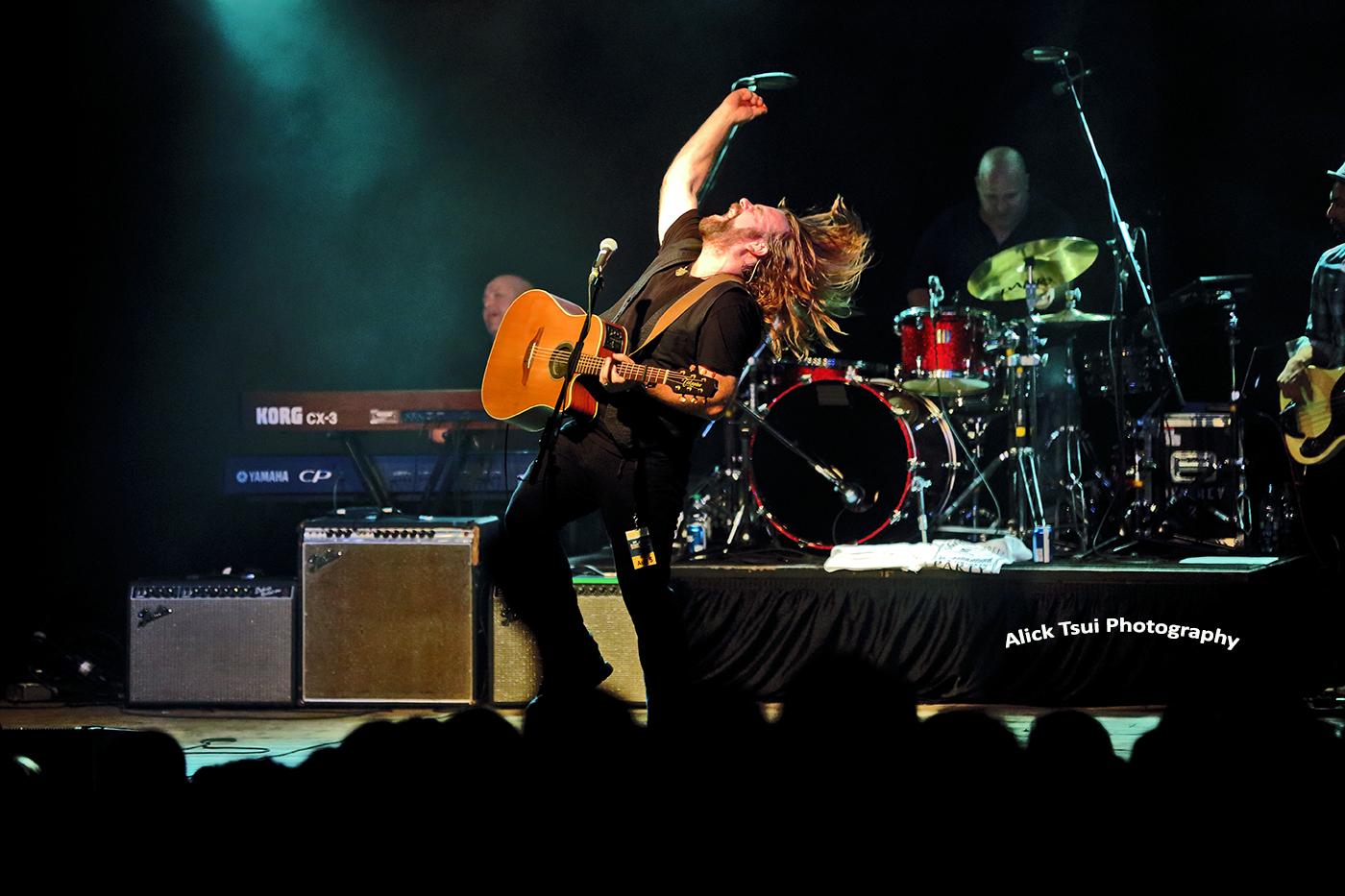
One of the best photographs I have seen in a long while taken by Alick Tusi at the George Street Festival and distrubuted on Twitter. Many thanks for sharing Alick. (no copyright infringement intended) Alick Tusi@positively4ever

(Sorry something happened with this blog post so I am just reposting it)

As I have mentioned in previous posts one of the things I love to do after concert performances of the artists and musicians which this blog is about, is to read the social media pages about how people share their stories. I love to read the thoughts of the musicians and artists whose gift it is to entertain, the professionals whose job it is to review such concerts and of course the fans who share their stories via words, photographs and on some occasions bootlegged videos. This time it is the George Street festival.

The Twitter feed of the official George Street Festival account kept fans in touch with what was happening nicely. Last night I came across the mother load of bootlegged videos of Alan Doyle’s concert soon after the event. They were uploaded onto YouTube and distributed on social media by a fan Jason Janes. It has been a while since I watched any bootlegged videos of Great Big Sea and their friends, so for this post I am going to revisit and watch some (These videos were acknowledged by George Street sites so I will take that as an okay approval type of thing).

I love the story these bootlegged videos told about Alan Doyle and the closing concert of the George Street Festival. They told me Alan Doyle was a showman and definitely where he belonged, in St. John’s Newfoundland.  What I love about these bootlegged videos was they told a story not only of what was happening on the stage, but what was happening off. To me the concert was more about Alan Doyle giving the audience what they loved and wanted to hear including the songs of Great Big Sea, Old Black Rum, Hit The Ground and Run and of course Ordinary Day. At times he let the audience run away with the song as he so often does. Alan Doyle and the fans were truly one in George Street on what Alan Doyle referred to on his Twitter feed as the best Tuesday night on Earth.

Alan Doyle and the band broke out in the Great Big Sea classic Ordinary Day, thanking God for the song. You know he meant it from his heart. It was the song that gave Great Big Sea their break and has remained a crowd favourite. He shared fond memories of the first time he played down the road at Trapper Johns in 1988. He paid tribute to the television show Republic of Doyle which Great Big Sea and Alan Doyle had been part of since it came to light over six years ago bringing St John’s and Newfoundland much exposure on the mainland and around the world. However, this was not Great Big Sea.

It must be a hard juggling act for any musician or band trying to remain grateful for the music and success of the past while trying to create a new future. Alan Doyle did this with style and grace. This was the Alan Doyle Band. The members of the Alan Doyle Band were fabulous indeed. Kendel Carson on fiddle and guitar, Cory Tetford on guitar, Shehab Illyas on bass, Great Big Sea’s drummer Kris MacFarlane and musician Paul Kinsman on piano and accordion. Together they provided a different, but excellent feel and sound to some old Great Big Sea favourites while forging ahead with their own music. There were the uniquely Alan Doyle Band moments and songs and the uniquely Alan Doyle moments and songs too. For example, I absolutely love I Don’t Like To Dance with Alan Doyle and his trustly sidekick Stickman Tak plus the gorgeous and fabulous Kendal Carson and her fiddle.
 
Then there was Where I Belong sung solo by Alan Doyle in front of his home crowd to close the concert filmed by @Lyndahere. The song Where I Belong tells the story of Newfoundland joining Canada and the migration of its people to the mainland which I gather would have touched many of the families in the audience. The crowd vocally let Alan Doyle know they also loved St Johns and Newfoundland and share the same feelings that when they also leave for the mainland, for whatever reasons, they too know where they will always belong in St John’s and Newfoundland.

What I like about these bootlegged videos was the sound which was heaps better than @Lyndahere’s bootlegged videos she distributed soon after because she is often too close to the stage. While @Lyndahere’s bootlegged videos may be technically better and are free of obstacles like fans and their body parts and cameras they often do not tell the other stories of what is happening on the stage and in the audience. That is her choice and the story she wishes to tell. As I have said before I don’t mind watching the occasional bootlegged video of a concert experience by a genuine concert goer but not those of what I term a ‘professional bootlegger’.

Bootlegged videos do not in any way replace a concert experience but are part of the concert experience. They tell me a lot about what the fan who is recording wants to see, hear and share which is sometimes not what the viewer wants to see and hear. Bootlegging is clearly a personal thing. The bootlegged videos by James Janes while not the best quality bootlegged videos I have ever seen told me important stories about the members of the band on the stage and the fans in the audience. They were on fire and just loving being together with family and friends singing, drinking and well having a good time on George Street, St John’s Newfoundland.

Thanks to Jason Janes for sharing. Links are available from his Twitter @JasonJanes account or YouTube account.


Fandom, An Unexpected Journey 600 Blog Posts... Thank You !

It seems like just yesterday I was celebrating writing and sharing my 500 th blog post. Today I am celebrating writing and sharing 600 blog ...