Wednesday, 7 January 2015

Killing the things we love….online piracy and reforms in Australia.

Recently the webpage variety.com released the top 10 pirated television shows of 2014 and who did the pirating. Game of Thrones and Walking Dead were among the most-pirated shows. Two of my favourite shows Supernatural and The Big Bang Theory made the list. The top pirating nations with the largest number of downloads were Brazil (28.4 million) followed by Russia (28.1 million), India (16 million), Australia (15.4 million), China 914.9 million) and the US (14.4 million) according to Excipio. Variety then provides a reason “That suggests piracy in many territories is fuelled by the fact that current American television shows aren’t available through legal channels.” As some content is available in wealthy first world nations Australia and the US immediately and/or soon after screening the reasons why people pirate and view pirated content are more complex.  

I have also been following with interest the Australian Federal Government’s attempts to introduce reforms to crack down on illegal pirates in Australia. After all Australians are one of the world’s greatest pirates of illegal content and as the research identified in Variety states the fourth largest downloader of illegal television content. Under the new reforms copyright holders will be required to issue notices and block would-be downloaders from accessing the popular websites that host illegal material.

The Australian Federal Government is also giving interested content providers and rights holders 120 days to agree to a piracy code… Tucker in the article “Why Australia’s new pirating laws are doomed to fail”. www.news.com.au published on December 14, 2014 states copyright holders will issue warnings to customers who illegally download and copyright holders can take action against infringers “after an agreed number of notices”. Copyright holders will work together with Internet Service Providers will provide ways of giving people information on legitimate ways to access content at fair and appropriation of costs.

Tucker (2014) states there is no evidence that warnings deter people from downloading. There is no way to identify people who are illegally downloading content as any number of people could be using a computer. However, this can be corrected by making the person whose name is on the account responsible for anyone who uses it and blocking users who abuse it.

The problem with these reforms is there is already a warning clearly contained within content and the copyright holders when service providers broadcast and they are just repeating themselves. Perhaps a better solution would be to make it compulsory for service providers to advertise a piracy warning both visually and verbally similar to that of the viewing classification system and highly visible to their viewers. Then those customers who record and distribute can be prosecuted immediately, if caught by copyright holders.

While the Australian Federal Government is taking action to combat piracy there are issues that are not addressed and that is the causes of piracy and the lack of cheap accessible content available to Australian customers. Those Australians pirating have changed the way television content is provided to costumers. However, for content providers like television stations waiting a week between when the show is aired in the US and on Australian screens is too long. The content is available to buy online and to be viewed on YouTube via legal sites. As a result television shows are being delegated to their second stations. I agree with Tucker in that Australians like me have said again and again that we do pay and are prepared to pay for content. The only way to do that is to make content affordable, fast and easy to access immediately after the aired in the US. 

References
Author unknown, 2014,“New laws would ban piracy websites in Australia” www.news.com.au published on December 9, 2014. 
Australian Broadcasting Commission, 2014, “Australians reminded that TV and movie piracy is theft”  www.abc.net.au published on September 10, 2014.
Spangler, T. 2014, “Top 10 Pirated TV Shows of 2014: ‘Game of Thrones’ ‘Walking Dead’ Lead List” www.varity.com published on 2 January, 2015.
Tucker, T. 2014, “Why Australia’s new pirating laws are doomed to fail”. www.news.com.au published on December 14, 2014.

Friday, 19 December 2014

Fandom An Unexpected Journey update…"OMG! He is so hot!"

I was hoping to finish off the year and the two and a half years mark by reaching 200 blog posts. I have achieved my goal. I didn’t write as many posts as I did last year. Thank you to all the people who visit my blog every day from a range of countries. Most are from the United States and Canada, but I get people from all places, interested in a range of topics about fandom.  

The last couple of weeks and months have been very exciting following the fans and all the fandom. There was the release of new music from Alan Doyle and his book tour, Sean McCann’s Canadian tour, the premiere of Murray Foster’s movie the Cocksure Lads in Whistler, British Columbia, Russell Crowe’s team won the NRL premiership in Australia, the premiere for his new movie The Water Diviner in Sydney, Australia, then Alan Doyle’s show at O’Reilly’s pub in St. John’s which was streamed live around the world. To top it all off, the final couple of episodes of Republic Doyle and an Alan Doyle new song was screened on CBC Canada. And of course the amazing and beautifully filmed video for Alan Doyle’s So Let’s Go. So it has been a busy time.

The fans shared their beautiful words, stories, pictures and concert videos brilliantly via social media including Twitter, Facebook and on chat lines. Fans travelled from around the world to attend Russell Crowe’s premiere, travelled to see Alan Doyle and Sean McCann in concert, to support Murray Foster and the Cocksure Lads movie and see the results of where they had put their funding. Others enjoyed the documentary on Erin’s pub and meals and drinks at their favourite St. John’s pubs and restaurants. All fans were excited about hearing new music from Alan Doyle and the hits on YouTube flooded in. I have been following the fans thoughts as the events occurred and it has been a very emotional ride for many.

What is clear more than ever, is the distinct difference between the haves and have nots. There are those at the centre of the fandom due to location, access to resources, money and content required to participate. For those who are able to fully participate they have found a wonderful place and great friends. For the have nots it is a different story. For example, social media was abuzz with the final episodes of Republic of Doyle. People from overseas were blocked through no fault of their own and could not participate. I did watch the whole of the final season six pirated on YouTube to gain an understanding of how people who watch piracy feel. Although it was only two or three days later than when the episodes were made available and I watched them the opportunity was gone to engage in discussion on social media. But the biggest joy for watching content has been to buy content legally and watch it soon after the screening of the episode in the US, totally free on my allocated library time.  

The majority of women in the fandoms I follow seem to be mature aged women. My question, why do mature aged women with careers, jobs and families engage with fandoms was answered by two highly respected fandom academics in a journal interview recently. In the interview the two academics share their ideas which I have briefly copied “fandoms can be a wonderful world –friends, community, a sense of belonging…it is a space where one can be one’s self – even if it is a bit geeky, sometimes thoughtful, a bit naughty…it can be liberating being in a fan community in particular for older women…a licence to be a bit silly, free from the constraints and boundaries of everyday expectations…not sure if there are many places for women and older women to find that…it is rare for women to find a place where they can be themselves…express genuine emotions that are not normally acceptable…they can shout from the rooftops…’he is so hot’…creative works can inspire your own creativity…(Clark 2014). It is always a total thrill to read ideas and research about a topic so close to my heart, fandom.

Where to next? I don’t really know. I have diverted a bit from my original goals of this blog being about the fans and fandom, to the work of the actors, singers and musicians by writing posts about what I am interested in for example, using selfies and social media to tell the stories. I have also turned my blog into a kind of collection site for some beautiful images and interesting articles by fans and the professionals. In that way the fandom has been bringing out my creativity. I am still really interested in what the fans have to say on social media, how they share their stories and creative work and work constructively with the artists and musicians involved for example making bootlegged videos in cooperation with Sean McCann. I would really like to go back to Canada and Newfoundland, to see Alan Doyle on his Let’s Go Tour and Sean McCann perform in a small intimate concert.

Thanks for visiting and reading…And not one bad comment. Touch wood. Any suggestions, stories and comments feel free to contact me.  

Merry Christmas and a safe and happy holiday to all my readers.

Smith Liz

References

Clark, C. N. (2014). SI/E6 Interview with a fan scholar (or two) Pt. 1 Luna Station Quarterly.

Thursday, 18 December 2014

The music business...a wonderful quote.

This picture was distributed on Twitter today by Paddy Daly @VOCMOpenline from Newfoundland. I thought this quote was worth its own post, as it is so true of the music business.

Embedded image permalink

PaddyDaly@VOCMOpenline Jack gets it @alanthomasdoyle 18 December 2014

A response to some of Russell Crowe’s The Water Diviner interviews…

I have seen the trailer of The Water Diviner. (I needed tissues) I have read some of the reviews and interviews from Australian newspapers. I am reading the book. (Again I needed more tissues)

Over the past week or so, newspapers around Australia and the world have been flooded with interviews by Russell Crowe promoting his new movie The Water Diviner. I have consciously only read the Australian reviews, because well they know the subject matter of Gallipoli within the Australian consciousness the best. Most of the interviews I have read repeated the same kind of information, the story of the film, Russell Crowe’s impressive film career, the beginnings of his role as a director and a few of his comments about the making of the film and interpretations about the Anzacs at Gallipoli. There were two interviews that really stood out for me and offered something a bit different than the others. To the best of my knowledge these interviews are not available online.

The first one “Crowe flies a movie” by Pip Christmass published in The Weekend West ‘Seven Days’ magazine that comes with The West Australian’s weekend edition December 13-19, 2014. The journalist writes “But the Russell Crowe I am speaking to is chatty, expansive, funny and impassioned. Perhaps it’s because I am deliberately not asking him all the usual paparazzi questions: the phone-throwing, the failed musical career, the relationship breakups. And perhaps it’s because he’s talking about his passion project The Water Diviner…” I agree with the journalist in that it is pretty bad form to keep going over events that happened long ago like the phone-throwing thing. But I am kind of confused about the failed music career comment. He has written and performed some great music with a range of people. I love the Crowe and Doyle Songbook 3 songs and I am hoping for more and so do others.

The journalist goes on to talk about the movie, the original idea and briefly what it is about. What I noticed and didn’t know is how much Australian movies of the past influence Russell Crowe. “Crowe says he wanted to hark back to the defining Australian films of the 1970’s – the movies that had such a deep influence on him as a child…”The films of Peter Weir, Bruce Beresford, Fred Schepisi and Gillian Armstrong, those things exploded in me. Because they were the stories of where I was from…those were Australian voices, and it’s always surprised me that we’ve had such ebbs and flows in our business because we’ve created so many great films – directors, actors, cinematographers, costume designers. At this stage, I wouldn’t be interested in going and directing a movie out of LA or whatever. The whole reason for me wanting to direct is to tell stories of the place that I am from, the place I understand”…And this is where we have come full circle back to Crowe’s desire to tell quintessentially Australian stories. “At this point I am not so interested in stories from other places...”

Until now I have always been under the impression Russell Crowe was never really fond of Australia or Australians other than his family and a few friends. Yes, Australia was the place he grew up in and his sanctuary where he could live an ordinary life with his wife and family after he had made it in Hollywood. There is no doubt he definitely appreciated that. However, I have always believed he was never particularly fond of Australia and Australians which was fostered mainly by his use of social media. Maybe it was the way Australia and Australians showed their lack of appreciation for exactly what he had achieved professionally and then there was the citizenship issue.

When it came to his work, making movies and telling stories I believed Russell Crowe genuinely thought everyone did everything better than Australians as he always chose to work someone else even though it meant being away from his family. Then there was the lack of support in sport for any Australian team other than his Rabbitohs. Whether his words about telling Australian stories and making movies about Australian stories remain true we will have to wait and see. Over the past he has shown an interest in some Australian stories including Batavia and the Tim Winton novel Dirt Music. He has also made some interesting documentaries for example, the story of his take over of the South Sydney Rabbitohs with Peter Holmes a Court and another one on the Sydney gang, the Bra boys. So that is true.  

The second article was published in The Weekend Australian Review last weekend (December 13-14) titled “Return to the Fatal Shore” by Michael Brody. The first thing that hits the reader in the face is an absolutely gorgeous photo of a smiling and happy Russell Crowe in a suit and tie that wins over the reader immediately. (He has over the past couple of weeks turned up to do interviews in his trackies which has attracted a great deal of attention on social media) The article opens with some interesting information about the difficulty of financing films in Australia. “Crowe has done more than bring some private investment –Kerry Stoke’s Seven Network and James Packer’s RatPac Entertainment – into an independent Australian film that didn’t put its hand out for government agency funding.”

The journalist goes onto to explain about Russell Crowe, his impressive movies and credits, thoughts on directing, the story of the movie, the crew he selected and his experiences directing. However, in this interview Russell Crowe states an important point about the Turkish Australian and New Zealand relationship “The Turkish experience resonated with Crowe, who can’t forget how accepting the country is of Australians and New Zealanders… “It’s quite an uncomfortable thing to have in common, that we were once at war, but I think it binds us and gives us an incredibly strong bond... “Not everyone sees the Turkish perspective as valid. And that shocks me.”

Australia, New Zealand and Turkey have created a special relationship through a shared history at Gallipoli. Every year around Anzac day, thousands of Australians and New Zealanders flock to Gallipoli to try and understand what happened there decades before, pay their respects and attend a dawn service. Many of them go to find out what happened to relatives who fought and died there long ago. A search that began in the memories, family stories and photographs of loved ones and the archives of national buildings like libraries and war memorials.  Then there is a whole tourism industry around Gallipoli so much so now Australians and New Zealanders need to apply for tickets to attend a service, in particular for next year. That says a lot about the relationship between Turkey, the Australians and New Zealanders.

As 2015 approaches and the 100 th anniversary there has been and will be plenty of debate and events concerning Gallipoli. As a nation we have to understand our own perspective first before those of others. Some Australians are not quite there yet for understanding others in particular those who are the descendants of the Anzacs who fought and died at Gallipoli. To me that is understandable.

Yes, I am an Australian.  

References
Anastasios, A and Wilson-Anastasios, M (2014). The Water Diviner. Sydney: Pan MacMillian Australian.


Derivative works revisited...

I am often left wondering why fans (most often the ones who profess to be the biggest fans of particular content) are not happy with beautifully crafted photographs and videos provided by the content creators for our enjoyment. 

I wonder why these fans need to make derivative works (often of poor quality) that don't offer anything new to the story being told and detract from the quality of the content. If the copyright holders do not want to distribute images then why should we? Approximately a year ago I wrote a post about derivative works circulated from various content in the fandom. The post is copied below. 

So why should we care? Copyright Kids provides an excellent answer…


“As the creator of your work, you should have the right to control what people can and cannot do with your work. In the United States - one of the world's biggest sources of creative works like movies, television shows, books, computer games, etc. -- this right to control your work has actually turned into big business, but that's what allows all the creative people around us to get paid for coming up with all the wonderful songs, shows, books, painting, movies and other great works that we enjoy. Just think of all the cool songs your favorite band wrote, the great books you loved reading, the plays, movies and television shows you love to watch again and again. These talented musicians, authors, illustrators and screenwriters deserve our respect and appreciation - and they deserve to make a living from the hard work they put into their creative works -- otherwise most of them wouldn't be able to produce as many (or any) of the songs, books, plays, movies and TV shows that you like. That's what copyright is all about. It reflects our appreciation for all the hard work that goes into creating "original works of authorship" and respect for the right of the creator of that work to control what people can and cannot do with it.”


@lyndahere and illegal copying of images…why we should care published on 5 November 2013

@lyndahere is illegally copying pictures from Alan Doyle’s Boy on Bridge documentary/DVD and distributing them via Twitter and other social media. She may also be giving a false impression to her followers that some how she has been involved in taking photographs and the making of the documentary/DVD. @lyndahere is giving a false impression that this activity of illegally copying photographs has been approved by CMT and Alan Doyle. If Alan Doyle or CMT wanted to distribute professional images they would have.

This information is from a previous post about @lyndahere and taking pictures in the movies but also can be applied to taking images off documentaries/DVDs.

Taking pictures of a movie projected in a theatre is also illegal under the copyright act. A patron in a movie theatre cannot reproduce a movie, distribute a work, perform the content elsewhere, display a copy of the movies or make derivative works.

A derivative work is defined by Copyright Kids as “a work that is based up one or more pre-existing works. One of the exclusive rights of a copyright owner is to make derivative works. The United States Copyright Act gives many examples of what is a derivative work. One example is a motion picture based upon a book. If you create a derivative work with the permission of the owner of the underlying work, you as the author of the derivative work can obtain a copyright covering the original material you contributed”. A picture taken off a dvd would be a derivative work. There are a whole range of works which are protected under copyright and include musicals, motion pictures, other audio visual sounds and sound recordings.

There are some circumstances in which people can reproduce others work without permission. Copyright Kids describes fair usage “The exclusive rights of the copyright owner are not unlimited. The copyright law establishes some limitations on these rights. One of the most important limitations on the exclusive rights is the doctrine of "Fair Use." The "Fair Use" doctrine allows limited copying of copyrighted works for educational and research purposes. The copyright law provides that reproduction "for purposes such as criticism, news reporting, teaching (including multiple copies for classroom use), scholarship, or research" is not an infringement of copyright. The law lists the following factors, which courts must consider together in determining whether a particular use of a copyrighted work is a permitted "Fair Use," or is instead an infringement of the copyright”.

It was difficult to find information about taking pictures of movies in a theatre. There is plenty of information on how to take pictures off DVDs using a home computer but not in movie theatres. It is also illegal to copy pictures from DVDs.

So why should we care? Copyright Kids provides an excellent answer…

“As the creator of your work, you should have the right to control what people can and cannot do with your work. In the United States - one of the world's biggest sources of creative works like movies, television shows, books, computer games, etc. -- this right to control your work has actually turned into big business, but that's what allows all the creative people around us to get paid for coming up with all the wonderful songs, shows, books, painting, movies and other great works that we enjoy. Just think of all the cool songs your favorite band wrote, the great books you loved reading, the plays, movies and television shows you love to watch again and again. These talented musicians, authors, illustrators and screenwriters deserve our respect and appreciation - and they deserve to make a living from the hard work they put into their creative works -- otherwise most of them wouldn't be able to produce as many (or any) of the songs, books, plays, movies and TV shows that you like. That's what copyright is all about. It reflects our appreciation for all the hard work that goes into creating "original works of authorship" and respect for the right of the creator of that work to control what people can and cannot do with it.”

Saturday, 13 December 2014

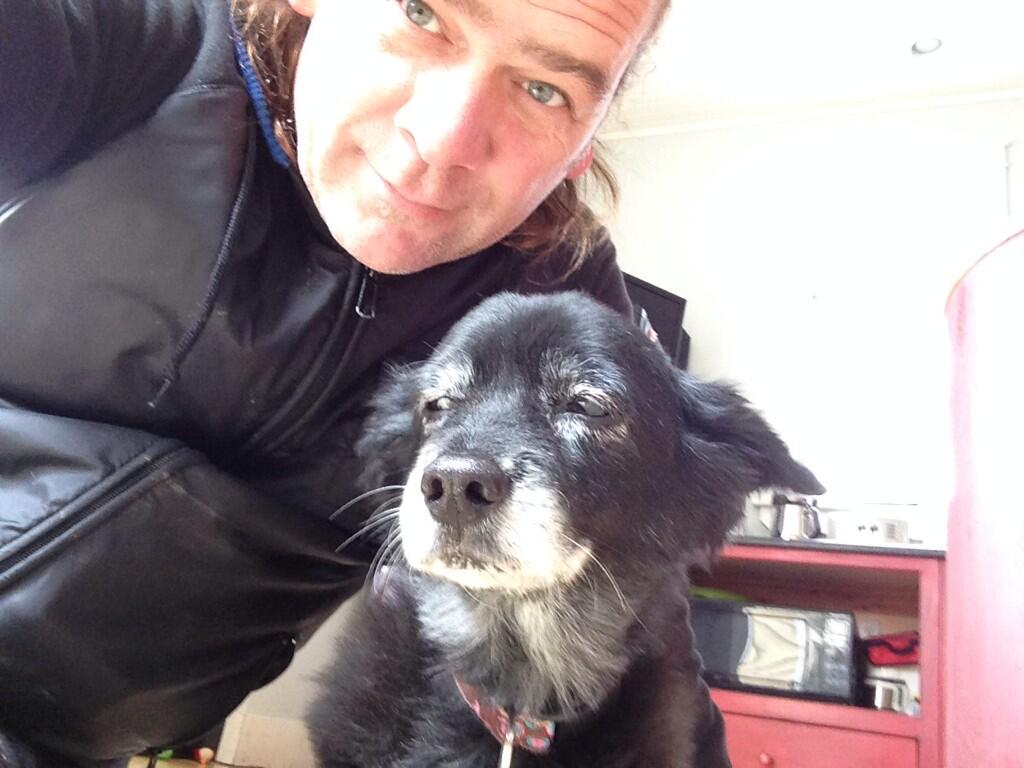
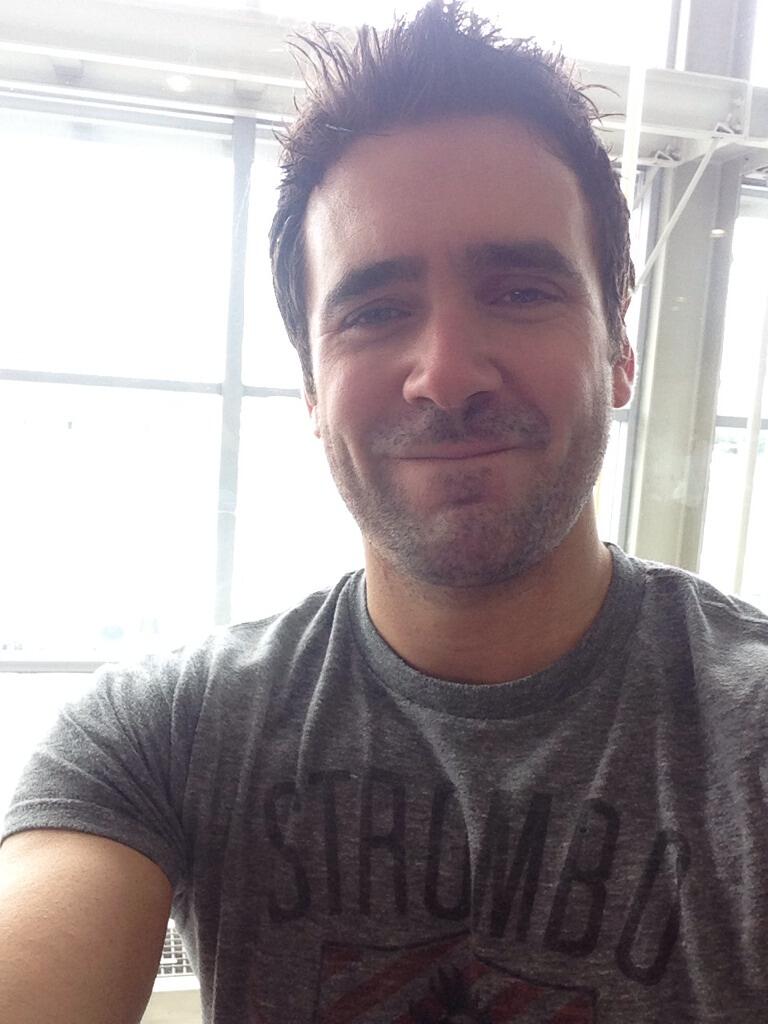
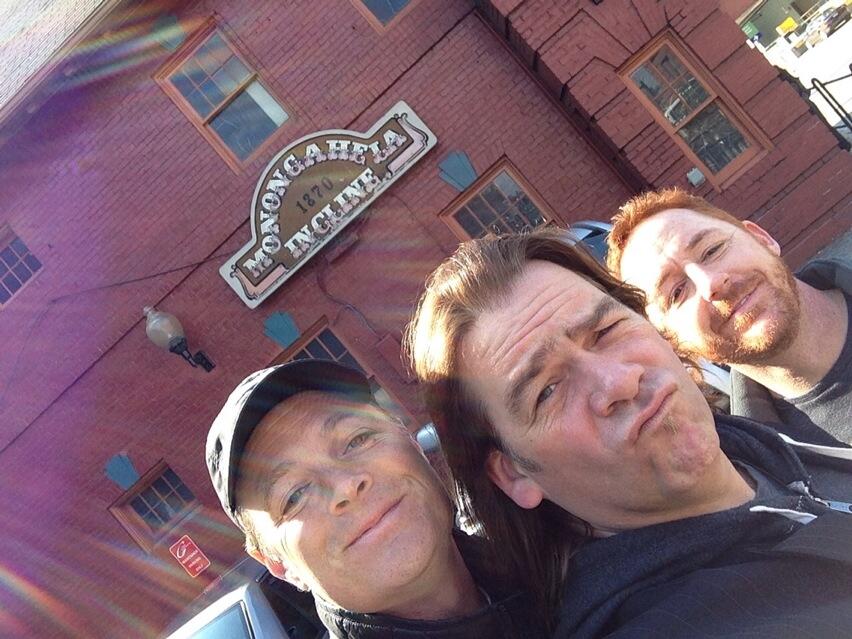
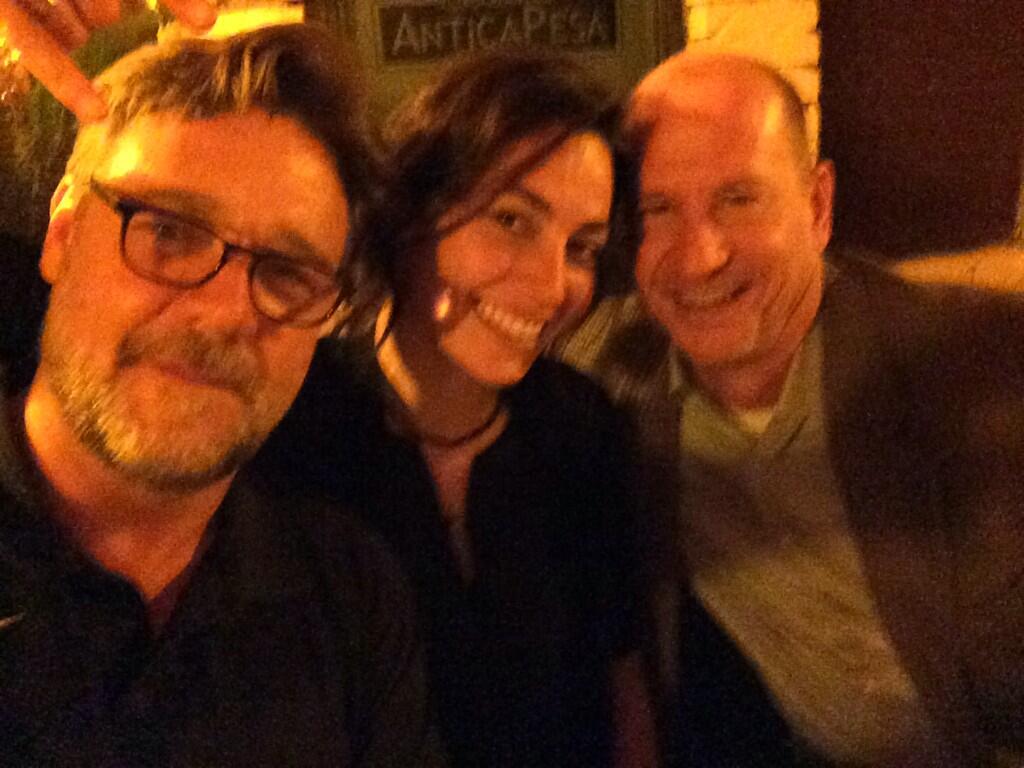
Russell, Alan,and Allan in selfies…selfies revisited and reposted…

NOTE: I have just found out the selfies from Scott Grimes seemed to be blocked. As a result I have reposted this post minus his name. Scott Grimes however, seems to have no trouble in distributing bootlegged and pirated videos recorded without permission from the content owners by @lyndahere via social media accounts. No problem Scott Grimes. I will not make any further reference to you or use content with you mentioned. The post had over 60 visits...My previous post on Great Big Sea selfies had over 650 visits.

My statistics from Blogger tell me that one of the most popular posts I wrote was on Great Big Sea and selfies published last year. The Great Big Sea selfies were being taken on the Great Big Sea XX tour last year in various places around America and Canada. The post is continually revisited and I have had over 500 hits. So I decided to revisit the topic of selfies.

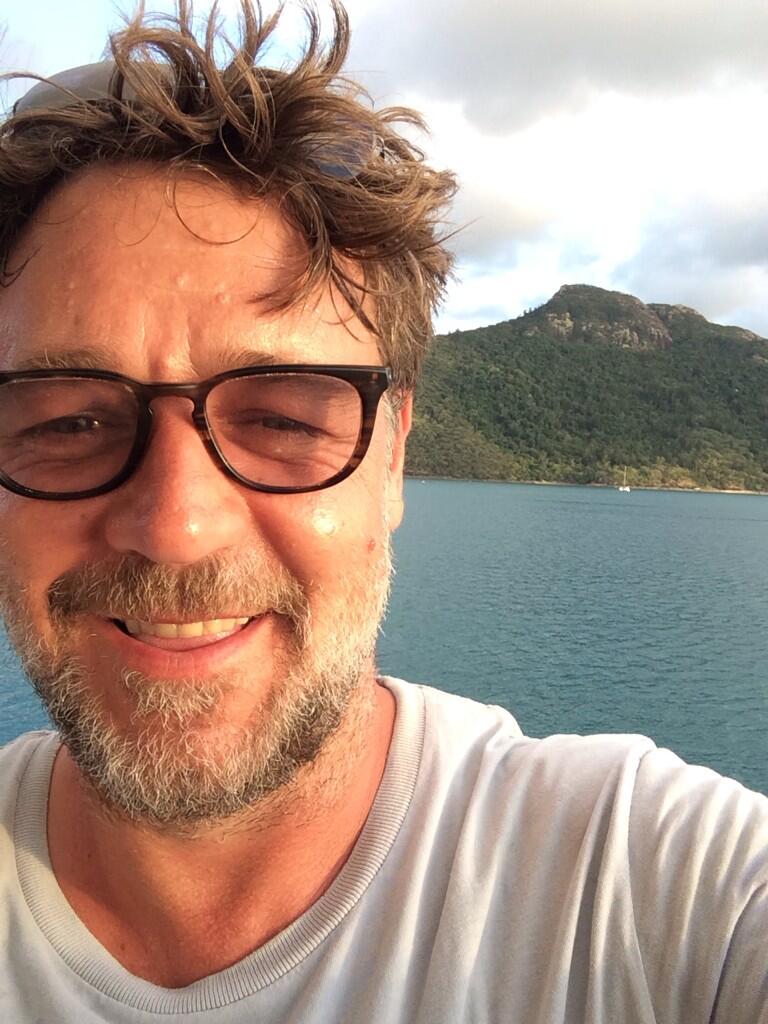
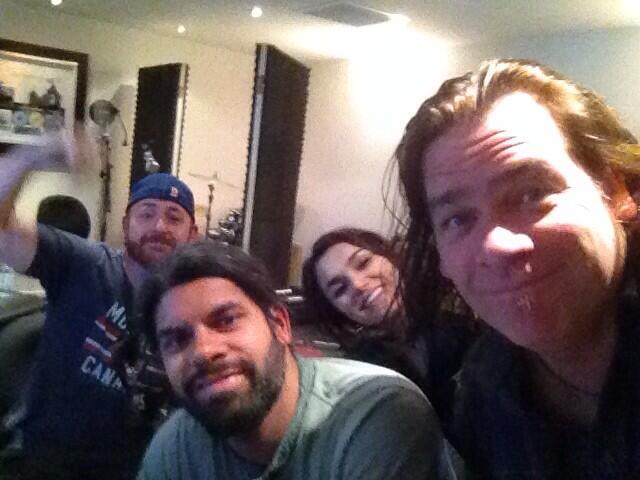
This time I have included a collection of selfies from Russell Crowe, Alan Doyle, Allan Hawco, Scott Grimes and the events of the past 6 months on Twitter. They include the Indoor Garden Party in Australia, Russell Crowe’s 50 th birthday in Pittsburgh while making a movie (attended by long time friends Alan Doyle, Allan Hawco and Micheal Bluie), Allan Hawco’s trip to South Africa to film A Book of Negroes and even one from Russell Crowe holidaying in the Whitsundays in Australia at the beginning of the year.

It was difficult to pick a favourite as I love them all. However, my favourite for this period goes to Alan Doyle and his beautiful dog Molly. I also loved a selfie of Allan Hawco and Lynda Boyd taken four days ago before the beginning of the filming of the final season of Republic of Doyle. (This photo was not included as I was unable to copy it from Allan Hawco’s Instagram account). Many thanks to the boys for sharing with the fans.

As most of us know, selfie was Oxford Dictionaries 2013 International Word of the Year and as a consequence there were many great articles about this cultural and social phenomena. The Oxford Dictionary online describes a selfie as “A photograph that one has taken of oneself, typically taken with a smartphone or webcam and uploaded to a social media website”. Wikipedia (2014) adds a bit more to the definition “They are often casual and are typically taken with a camera held at arm’s length or in a mirror”. (A bit more difficult than it seems, for a good one anyway). I imagine our boys do it for the same reason as most people do. Selfies are easy to create and share at a particular time and place, and give them control over how they present themselves to others.

“The Meanings of the Selfie” by James Franco was published on 26 December 2013 in The New York Times. This article was chosen deliberately from a male perspective about his professional and personal use of selfies (as distinct from a female perspective and a feminist analysis and comments). James Franco is an actor, writer and director. He writes in his concluding comments “I am actually turned off when I look at an account and don’t see any selfies, because I want to know whom I’m dealing with. In our age of social networking, the selfie is the new way to look someone right in the eye and say, “Hello, this is me”.


(no copyright infringement intended for the above photographs taken from the official Twitter accounts of Russell Crowe, Alan Doyle, and Allan Hawco)

Note... the photos by Scott Grimes seem to be blocked.


“The Meanings of the Selfie” by James Franco in The New York Times on 26 December 2013. (no copyright infringement intended)

Selfies are something new to me, but as I have become increasingly addicted to Instagram I have been accused of posting too many of them. I was called out on the “Today” show, and have even been called the selfie king.

Maybe this is so, but only because I’ve learned that the selfie is one of the most popular ways to post — and garner the most likes from followers. The likes spin out of control for selfies of me and my two handsome brothers, especially Dave, the other actor, whose image pulls in its own legion of teenage fans.

I can see which posts don’t get attention or make me lose followers: those with photos of art projects; videos telling the haters to go away (in not so many words); and photos with poems. (Warning: Post your own, and you’ll see how fast people become poetry specialists and offer critiques like “I hate you, you should die.”)


But a well-stocked collection of selfies seems to get attention. And attention seems to be the name of the game when it comes to social networking. In this age of too much information at a click of a button, the power to attract viewers amid the sea of things to read and watch is power indeed. It’s what the movie studios want for their products, it’s what professional writers want for their work, it’s what newspapers want — hell, it’s what everyone wants: attention. Attention is power. And if you are someone people are interested in, then the selfie provides something very powerful, from the most privileged perspective possible.

We speak of the celebrity selfie, which is its own special thing. It has value regardless of the photo’s quality, because it is ostensibly an intimate shot of someone whom the public is curious about. It is the prize shot that the paparazzi would kill for, because they would make good money; it is the shot that the magazines and blogs want, because it will get the readers close to the subject.


And the celebrity selfie is not only a private portrait of a star, but one also usually composed and taken by said star — a double whammy. Look at Justin Bieber’s Instagram account (the reigning king of Instagram?), and you will find mostly selfies. Look at other accounts with millions of followers — like that of Taylor Swift or Ashley Benson (of the TV show “Pretty Little Liars”) — and you’ll find backstage selfies, selfies with friends, selfies with pets.

These stars know the power of their image, and how it is enhanced when garnished with privileged material — anything that says, “Here is a bit of my private life.”

I’ve found that Instagram works much like the movie business: You’re safe if you trade “one for them” with “one for yourself,” meaning for every photo of a book, painting or poem, I try to post a selfie with a puppy, a topless selfie or a selfie with Seth Rogen, because these are all things that are generally liked.

Now, while the celebrity selfie is most powerful as a pseudo-personal moment, the noncelebrity selfie is a chance for subjects to glam it up, to show off a special side of themselves — dressing up for a special occasion, or not dressing, which is a kind of preening that says, “There is something important about me that clothes hide, and I don’t want to hide.”

Of course, the self-portrait is an easy target for charges of self-involvement, but, in a visual culture, the selfie quickly and easily shows, not tells, how you’re feeling, where you are, what you’re doing.

And, as our social lives become more electronic, we become more adept at interpreting social media. A texting conversation might fall short of communicating how you are feeling, but a selfie might make everything clear in an instant. Selfies are tools of communication more than marks of vanity (but yes, they can be a little vain).

We all have different reasons for posting them, but, in the end, selfies are avatars: Mini-Me’s that we send out to give others a sense of who we are.

I am actually turned off when I look at an account and don’t see any selfies, because I want to know whom I’m dealing with. In our age of social networking, the selfie is the new way to look someone right in the eye and say, “Hello, this is me.”


Friday, 12 December 2014

Republic of Doyle…#Lastcall…the fans react…

Wow…What an amazing ride it has been for fans over the last week or so?

First, there was the premiere of Murray Foster’s movie the Cocksure Lads in Whistler, British Columbia, then Sean McCann’s show at The Ship in St. John’s, Newfoundland, Russell Crowe’s pop over visit in Gander, Newfoundland and shout out by Canadian politicians in their parliament, then Alan Doyle’s show at O’Reilly’s pub in St. John’s which was streamed live around the world. To top it all off, the final episode ever of Republic Doyle and an Alan Doyle new song was screened on CBC Canada.

And the fans were there every step of the way. Fans shared their stories via social media including Twitter, Facebook and on chat lines. I have been following the fans thoughts as the events occurred and it has been a very emotional ride for many. Fans had travelled from around the world to support Murray Foster and the Cocksure Lads movie and see the results of where they had put their funding. Other fans who shared their Wednesday nights with Republic of Doyle were immediately feeling the loss. Many fans were excited about hearing new music from Alan Doyle and the hits on YouTube flooded in.

I found these two great articles by CBC Canada news about the final episode of Republic of Doyle and how fans reacted to the last call by Republic of Doyle on social media. I love these kinds of stories even though I have yet to watch the final episode as it has not been made available to overseas fans and it contained spoilers. The attached social media feed contained a great collection of tweets. One of the tweets contained my favourite scene from the whole show in which Jake explains to Jimmy (Scott Grimes) about Newfoundlanders and the word b’y. The fact that only Newfoundlanders can say b'y is a really important point. Someone from Twitter has created this wonderful little four framed photo/ tweet from the episode. 


Chalupa Batman@bigeanman So true "@kerrimacd #doyletweets #LastCall @allanhawco @scottgrimes" (no copyright infringement intended)

I was already pretty peeved I had not gone to St. John’s around this time to join in the celebrations. Firstly, I missed both the Sean McCann show at The Ship and the Alan Doyle show at O’Reilly’s pub. Then the final episodes of Republic of Doyle. Now I am even a bit more peeved after I read the following article by CBC Canada news that there is going to be a massive garage sale of Republic of Doyle set memorabilia. What a thrill it would be for a fan to be able to buy something from the set? I would have loved a Rose Doyle handbag. All proceeds will go to local charities. However, as fans know, the show has not ended completely. Some of the sets and props will be kept for the Republic of Doyle television movie. Yes, we can’t wait for the Republic of Doyle television movie.

Jake Doyle's last ride: Social media reacts to Republic of Doyle finale: The end of Newfoundland and Labrador's favourite crime show By Geoff Bartlett, CBC News Posted: Dec 11, 2014 7:45 AM NT Last Updated: Dec 11, 2014 11:20 AM NT (No copyright infringement intended)

SPOILER ALERT!

If you didn't catch last night's episode of Republic of Doyle, do not read!

After six successful seasons, Repubic of Doyle’s final two-hour episode aired Wednesday night.

The episode saw Jake and Leslie battling it out with the Chevaliers and corrupt politicians one last time.

The first of the two final chapters began with Jake on trial for murder, which was a big part of the promotion leading up to the finale.

Many viewers were perhaps surprised when Jake was found guilty. However, it turned out that the judge, played by Andy Jones, was being blackmailed.

Jones wasn't the only familiar face in the episode, with Rick Mercer and Mary Walsh joining in for the grand finale as well.

With the cops hot on his tail, Jake had to deal with death threats against his family, stab wounds and the constant threat of jail time.

Last call

Along with the usual sleuthing and action, the conclusion of the show had many dramatic and emotional moments as well.

The relationship between Des and Tinny finally reached a climax, as did that of Jake and Leslie.

When the show closed out on Wednesday night, viewers were brought two years into the future.

As Des and Tinny were getting married in the final moments, Leslie held two children which presumably belong to Jake. Mal then turns to Jake and asks him if he is happy.

Doyle replies: "I wish this moment would never end."

A collective "me either" could almost be heard from the many fans of the St. John's-based show who tuned in on Wednesday night.

Viewers took to social media, as they always did, throughout the final two episodes. The #doyletweets hashtag had become a tradition for those watching the show, allowing them to share their thoughts and opinions in real time.

Many lamented the end, while others simply expressed their thanks to the cast and crew for six years of entertainment.

Kaitlin Payne, from Labrador City, wrote: "Sad to see the show ended, but loved the ending."

"What will we do on Wednesdays now?"

Those sentiments were repeated over and over, by viewers in and outside Newfoundland and Labrador.

A song by Alan Doyle closed out the final episode.

One of the lines in the song was "this is the moment that we've been waiting for."

Long time fans of the show may have been sad to see it end on Wednesday, but for a province that embraced Republic of Doyle for six great seasons, they'll likely be waiting a long time to see something like it again.

Garage sale of epic proportions for Republic of Doyle props CBC News Posted: Nov 20, 2014 5:26 PM NT Last Updated: Nov 20, 2014 5:26 PM NT (no copyright infringement intended)

If you're one of the fans who's going to miss CBC's Republic of Doyle, you'll have a chance to take home a piece of the show this weekend.

The show has wrapped up filming of its sixth and final season, and will be selling props, sets and wardrobe pieces at a garage sale in St. John's on Saturday.

Ross Leslie, production manager, said just about everything is up for grabs — including the kitchen sink.

"We have to get rid of it all because it is a tonne of stuff, and to pay for storage for it, until we do the movie, would be much too long keeping it and paying for storage. And we don't have it [the movie] written yet," said Leslie.

"So, how much is going to take place in The Duke?  We don't know. If it's only a day, we'll probably just go to The Duke and film it rather than build it all over again."

Some of the more iconic show pieces, including Jake Doyle's leather jacket and the GTO, are being saved for use in the movie.

The sale is going ahead on Saturday at the old Torbay Recreation Centre, where the show was filmed, from 10 a.m. until 3 p.m.

Proceeds from the sale of items will be donated to charities in the St. John's area, as a gesture of thanks from the show to the city.

Fandom, An Unexpected Journey 600 Blog Posts... Thank You !

It seems like just yesterday I was celebrating writing and sharing my 500 th blog post. Today I am celebrating writing and sharing 600 blog ...